
Who pays for a broken sewer line in NYC? The property-line rule
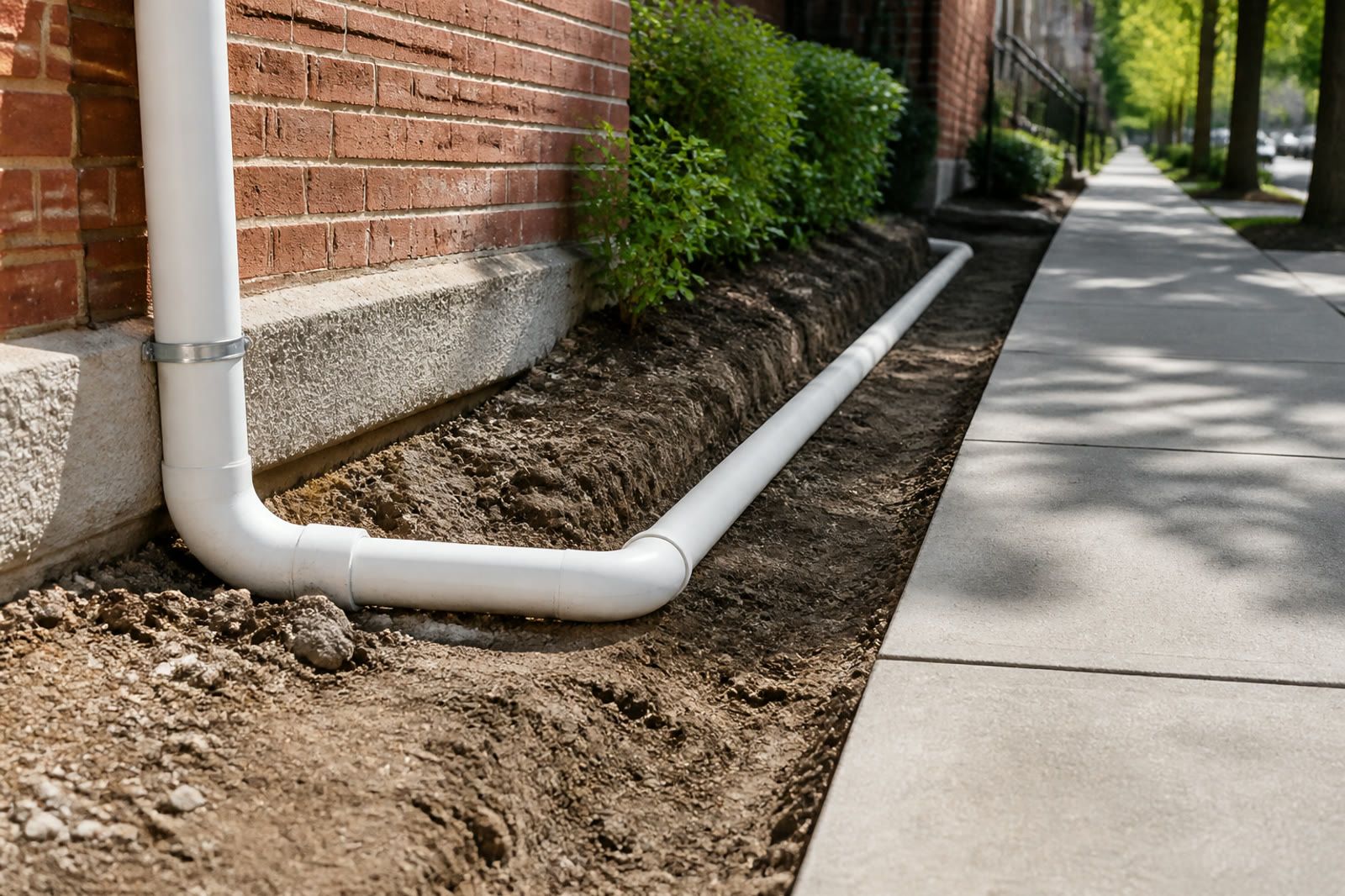
In New York City, the property owner is generally responsible for the sewer service line from the building all the way to the City sewer main. DEP is responsible for the public main. The owner’s section does not stop at the front wall or property line; it can continue under the sidewalk and into the street.
That is the practical rule behind NYC sewer-line repair responsibility. The expensive mistake is assuming that anything beyond the stoop automatically belongs to the City.
Where private responsibility ends
NYC DEP’s homeowner guidance states that owners are responsible for their water and sewer service lines from the building to the City’s mains. DEP repeats the same boundary on its sewer-backup page: the property owner owns and maintains the service line connecting the property to the City sewer main.
For a Brooklyn brownstone or row house, that route may run from the cellar, beneath the front areaway or yard, under the sidewalk, and toward a main below the street. The exact alignment, depth, materials, and connections must be verified at the property.
The City generally handles a defect in the public main. The owner generally handles a root-filled, offset, broken, or collapsed private lateral up to its connection with that main.
What happens when you report a backup
Report raw sewage backing into a building to 311. DEP says it will investigate. If the cause is in the City system, DEP begins its repair. If the investigation identifies a defective private line, it may issue a Notice to Repair to the owner.
That notice is not a diagnosis of every foot of pipe. Before approving a large private repair, the owner still needs a clear scope: what defect was found, where it is, how much line is affected, and why the proposed method fits.
A camera inspection can document visible roots, cracks, offsets, corrosion, standing water, or collapse in the accessible line. Locating equipment may help mark a camera head or defect from above ground. The footage should answer a basic question: is this a limited section that can be repaired, or evidence of broader failure?
Who can perform the repair
NYC treats a sewer house connection as regulated plumbing and infrastructure work. DEP says a Licensed Master Plumber must file the permit to repair or relay a sewer house connection. NYC DOB’s house-connections guidance describes the application, plans, and agency inspections involved.
That matters when the defect is under a sidewalk or street. Excavation, restoration, traffic rules, utility conflicts, and inspections can all affect the scope. Ask who is filing each permit and who is responsible for closing it—not just who is bringing the excavator.
Brooklyn Sewer Solutions does not publish a license number because that business detail has not been verified for this content. For any permitted connection work, confirm the Licensed Master Plumber of record and permit information before work begins.
Do not approve a replacement from one symptom
A basement backup does not automatically mean the lateral is broken. Grease, roots, scale, a foreign object, and a public-sewer surcharge can all restrict or reverse flow. Start with the evidence.
The same rule applies to old materials. Pre-war cast iron may have internal corrosion; older clay laterals may have many joints vulnerable to separation and roots. Age and material affect what is plausible, but neither proves that the full line needs replacement. Our brownstone sewer guide explains the old-building context, and sewer-line repair starts with the visible condition rather than the year on the deed.
What the owner should ask before signing
- Where does the private service line connect to the City main?
- What exact defect is visible, and at what measured distance from the access point?
- Is the damage isolated or repeated along the line?
- Does the line need cleaning before a complete camera pass is possible?
- Is the proposal a spot repair, rehabilitation, or full replacement?
- Which Licensed Master Plumber will file the house-connection permit?
- What street or sidewalk restoration is included?
- What assumptions could change the price?
The quote should follow those answers. Our pricing approach is simple: explain what changes the scope; do not turn an unseen pipe into a fixed promise.
What about insurance or a service-line plan?
Coverage depends on the actual policy or protection contract. DEP describes an optional service-line protection program, but eligibility, exclusions, and claim rules matter. Homeowners insurance and sewer-backup endorsements are separate products. Ask the provider in writing whether the failed section, excavation, restoration, and cause are covered before authorizing non-emergency work.
Frequently asked questions
Is the sewer line under the sidewalk mine?
Under NYC’s general rule, yes: the owner’s service line continues from the building to the City main. The property line is not the maintenance boundary.
Does DEP pay if it issues a Notice to Repair?
No. A Notice to Repair means DEP identified a condition in the private service line that the owner must address. Review the notice and hire the appropriate licensed professional.
What if two buildings share a connection?
Do not guess from the pipe route. Shared or interconnected conditions can raise ownership, access, and allocation questions that depend on records and the actual configuration. Get the line mapped and seek property-specific legal guidance if responsibility is disputed.
Can a broken line be repaired without digging the whole route?
Sometimes. A spot repair, liner, or pipe-bursting method may fit certain defects and layouts; other failures require excavation. First decide repair versus replacement, then compare methods.
Need evidence before a repair quote?
Brooklyn Sewer Solutions is available 24/7. We inspect the accessible line and explain what the camera supports—no bigger scope than the evidence.