Brooklyn building guide
Brownstone Basement Backups
A cellar backup can start in a fixture branch, an old stack transition, the building drain, or the lateral. The right fix depends on where the restriction actually is.
Start with the fixture pattern
One slow sink points somewhere different than a tub that fills when a toilet flushes. When several low fixtures react together, the obstruction is likely downstream of them.
Common weak points in older buildings
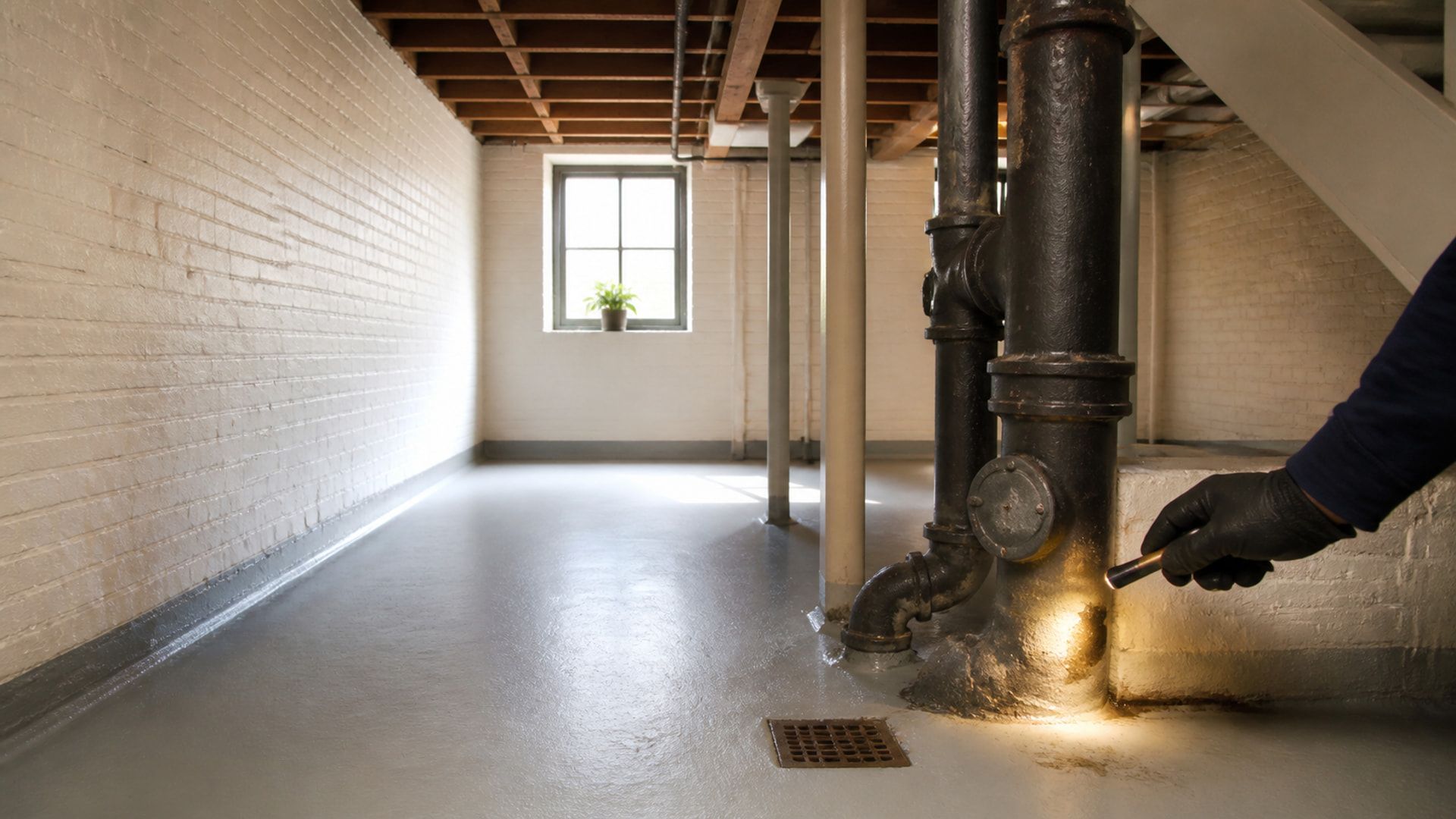
Brownstones often contain a mix of original and later plumbing. Corroded cast iron, poorly aligned transitions, hidden cellar bathrooms, limited cleanout access, and old clay laterals can all affect diagnosis.
- Cellar stack transitions
- Building-drain fittings below the slab
- Mixed pipe materials
- The private lateral and curb-side connection
Cleaning, repair, and prevention
A cleaning may restore flow; the camera determines whether a structural defect remains. If heavy rain is part of the pattern, public-sewer conditions and backflow protection may also need separate evaluation.
Frequently asked
Clear answers before the work.
Why does the cellar drain back up first?
It is often the lowest open point in the building, so wastewater appears there when a downstream line cannot carry flow.
Does a recurring backup mean the whole line is bad?
No. It can be recurring buildup, roots at one joint, or a localized structural defect. Inspection distinguishes those conditions.
Can the line be inspected from inside?
Often, if there is a usable cleanout or fixture access. The available entry point and blockage determine how much of the line can be seen.
Will a backwater valve prevent every backup?
No. It addresses certain reverse-flow conditions and must be selected, installed, and maintained for the specific building. It does not fix a blocked private line.
Keep exploring
Related Brooklyn service pages.
See the line before you decide.
Owner-operated, camera-first, 24/7 across Brooklyn.