
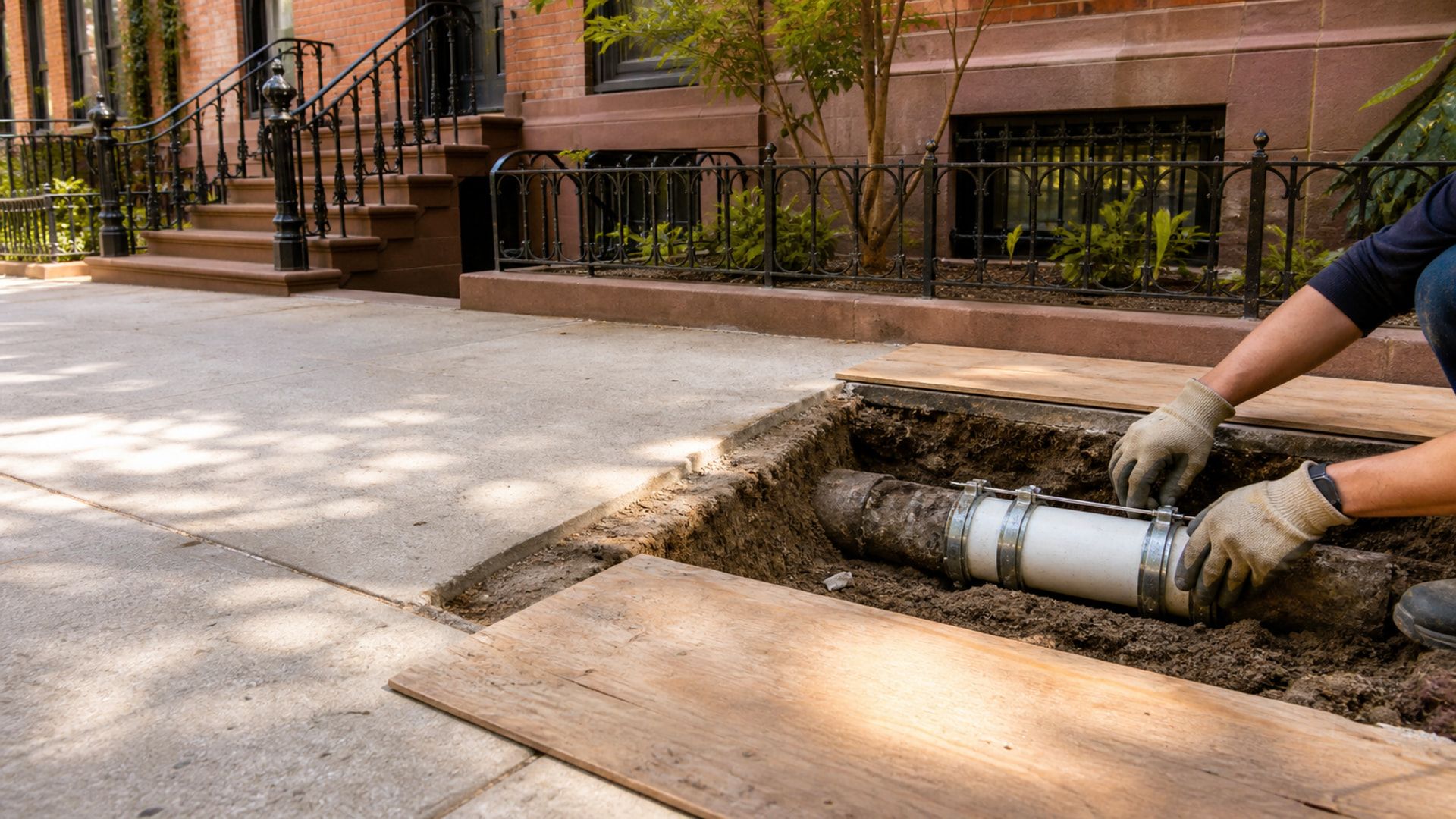
Repair the section that failed
Sewer Line Repair
A repair recommendation should begin with the visible defect—not a default assumption that the whole sewer line needs replacement.
What can require repair
Cleaning can restore flow, but it cannot seal a broken joint, correct a severe belly, or rebuild a collapsed section. The camera and locator help distinguish a maintenance problem from a structural one.
- Cracked or separated joints
- Pipe offsets and severe bellies
- Root entry through failed sections
- Corroded transitions
- Partial or complete collapse
Spot repair or broader replacement
An isolated defect may support a targeted repair. Repeated failures along the run may make a larger replacement more sensible. Access, depth, grade, material, and the condition of the surrounding pipe all affect the recommendation.
Confirming the completed work
Where the route is accessible, the repaired line is cameraed again. You should be able to connect the finished work to the defect that was shown at diagnosis.
Frequently asked
Clear answers before the work.
Does every recurring clog need a repair?
No. Some recurring clogs are maintenance problems. Repair is considered when the inspection shows a structural defect or repeated entry point.
Can just one section be repaired?
Sometimes. A localized defect with sound pipe on either side may support a spot repair.
Will the sidewalk need to be opened?
That depends on the defect location, depth, access, and whether a trenchless method is suitable. The proposed access should be clear in the written scope.
How do I compare repair quotes?
Compare the documented defect, exact section, access method, restoration included, and written terms—not only the total number.
Keep exploring
Related Brooklyn service pages.
See the line before you decide.
Owner-operated, camera-first, 24/7 across Brooklyn.