
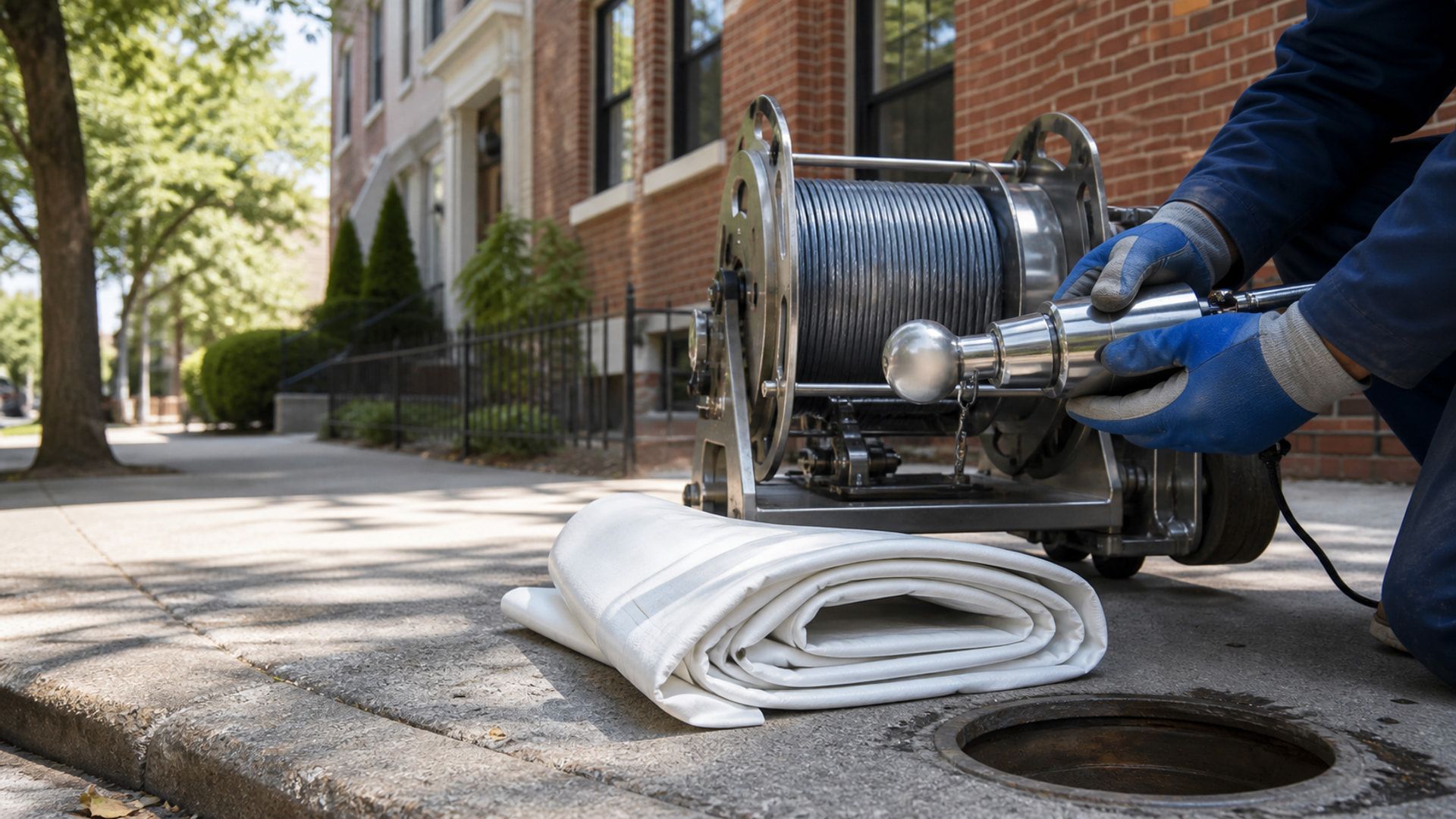
Less excavation where conditions allow
Trenchless Repair
Pipe bursting and lining can reduce excavation, but neither method is right for every Brooklyn lateral.
Two different methods
Pipe bursting pulls a replacement pipe through the route of the old one. Lining installs a new structural layer inside a suitable host pipe. They solve different conditions and have different access needs.
When trenchless may not fit
A severe belly, a badly misaligned route, missing pipe, poor access, or a host pipe that cannot accept a liner can rule out a trenchless approach. Open excavation can be the clearer and more durable option in those cases.
A scope you can compare
A useful quote identifies the method, access points, pipe length and material, surface restoration, and the inspection evidence behind the recommendation. Permits and site-specific requirements should be confirmed in writing for the actual job.
Frequently asked
Clear answers before the work.
Is trenchless always cheaper?
No. Access, depth, length, restoration, and method determine the cost. Its main advantage can be reducing disruption where the conditions support it.
Can a bellied line be lined?
A liner follows the host pipe and does not correct every grade problem. A visible belly must be evaluated before a method is selected.
Will you still need an access opening?
Usually some access is required. The location and size depend on the method and property.
How is a trenchless repair checked?
The accessible finished run should be inspected so the result can be compared with the original condition.
Keep exploring
Related Brooklyn service pages.
See the line before you decide.
Owner-operated, camera-first, 24/7 across Brooklyn.