
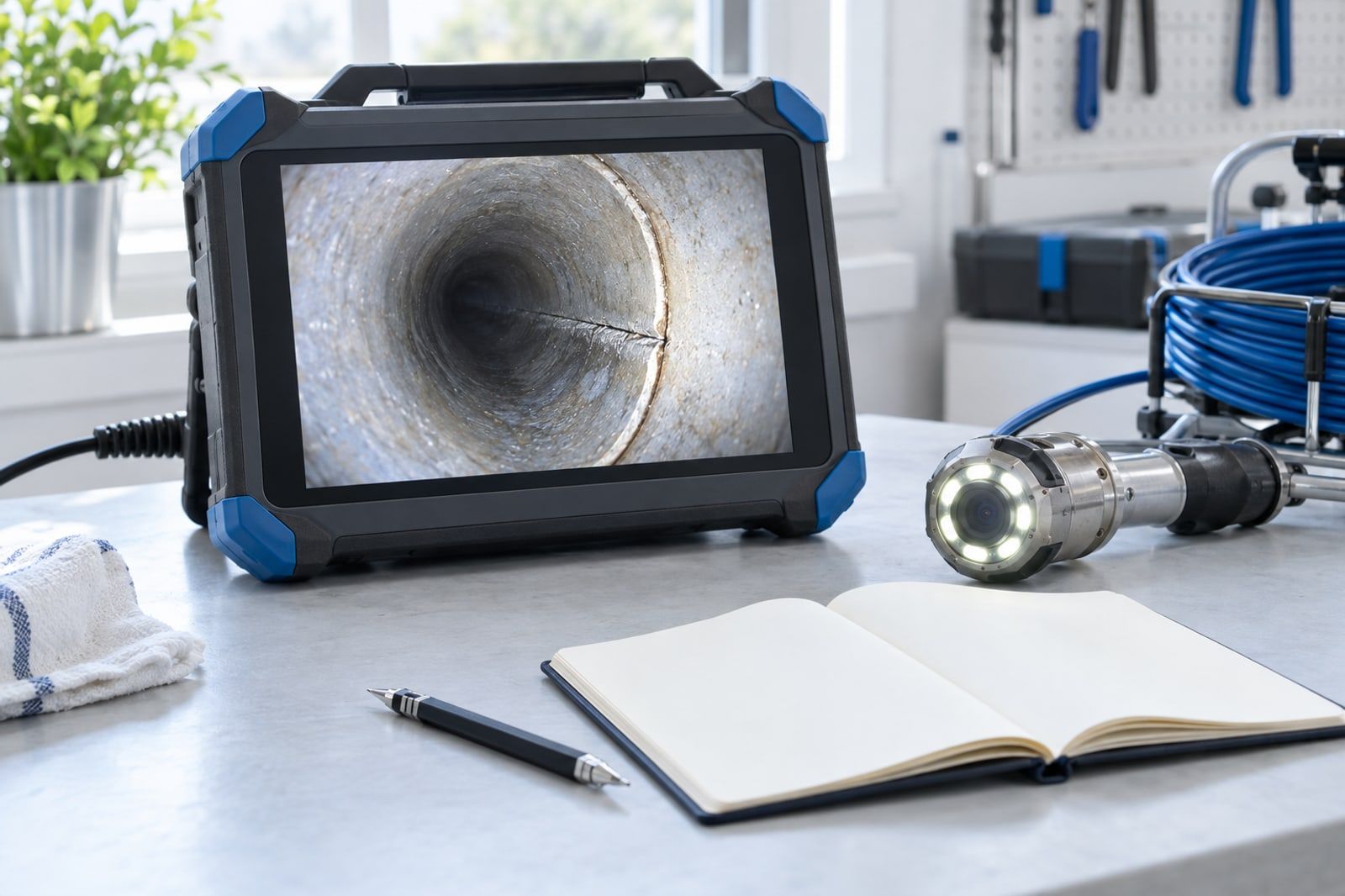
How to read a sewer camera inspection video before approving repairs
A sewer camera video is useful because it gives a homeowner something better than a verbal summary. It can show what the camera reached, what was visible, and where the view became limited. It should not be treated as a magic scan of every hidden section of pipe.
Before you approve repair work, use the footage to connect the recommendation to the condition that was actually seen. The important questions are straightforward.
Start with the limits of the inspection
Ask where the camera entered the line and how far it traveled. A camera can inspect only the route it can reach. A sharp turn, solid blockage, standing wastewater, damaged pipe, or limited access can stop the pass before the whole accessible run is visible.
That does not make the footage useless. It means the report should say what it covered and what it did not. If the camera stops at a blockage, the immediate work may be to restore enough flow for a later condition pass.
The first thing to look for is a plain statement of scope: entry point, distance if available, end point, and anything that blocked the view. That gives the rest of the video context.
Separate a blockage from the pipe condition
The object or material blocking flow is not always the entire story. A camera may show paper, roots, grease, scale, or another obstruction. After the line is cleared, a second look can show whether the pipe wall and joints behind it are intact.
For example, roots can be the immediate blockage and also evidence that there is an opening at a joint or defect. Heavy buildup can narrow a line while hiding corrosion or a crack. A camera pass after cleaning can help separate “the line is open now” from “the cause has been addressed.”
That is why drain cleaning and a camera inspection often answer different parts of the same question. One deals with flow. The other helps show the condition left behind.
Look for the location, not just the label
Words such as crack, offset, root intrusion, or collapse are more useful when they are tied to a visible location in the line. Ask where the condition appears and whether it is isolated or repeated.
A repair scope should make sense in relation to that location. One visible defect may support a targeted repair. Repeated failed joints, broad deterioration, or a section the camera cannot pass may point to a larger investigation. It should not be assumed from a single label alone.
If locating equipment is used, ask whether the visible condition was marked from above ground. That can help connect the camera distance to a practical repair area. If it was not located, ask what information is still needed before excavation or another repair method is selected.
Ask what the video does not prove
Good footage includes uncertainty. A camera may show standing water but not prove the exact outside shape of the pipe. It may show a defect but not show every part of the route beyond it. It may reach a material transition without revealing what is past an impassable section.
That is not a reason to dismiss the inspection. It is a reason to ask for a recommendation that matches the evidence. The useful conversation sounds like this:
- What is plainly visible in the video?
- What is the likely effect on flow?
- What could not be confirmed from this pass?
- What work addresses the visible condition?
- What would require more access or another inspection?
The answers should be understandable without turning you into a pipe expert.
Compare repair options against the footage
If repair is proposed, ask whether it is intended to clear an obstruction, fix an isolated defect, replace a failed section, or address a broader route. Those are different scopes with different reasons.
Brooklyn Sewer Solutions’ sewer-line repair page explains the service path, while the repair-versus-replacement guide helps frame the decision. Neither page replaces a look at your specific line. The camera footage should remain the starting point.
It is reasonable to ask for time to review the video before authorizing major work. Keep the question focused on the evidence: where is the condition, how much of the line was visible, and what does the proposed work correct?
Save the footage and the written notes
If a recording or report is available, keep it with the job records. Note the date, the symptom that led to the inspection, and any work completed before or after the pass. That record can help if the issue returns or if you need to compare a future inspection.
Do not rely on memory alone, especially after a stressful backup. A brief written note can be more useful later than a vague recollection that “someone said there was a crack.”
A camera should make the next step clearer
The value of a sewer camera is not that it guarantees one answer. It is that it lets the next decision rest on visible evidence and stated limits. When you can see the accessible line and ask the right questions, you are in a better position to understand why a repair is being recommended.
Request a camera inspection from Brooklyn Sewer Solutions if you need a clearer view of a recurring drain or sewer problem.
Frequently asked questions
Can a sewer camera see the whole line?
It can inspect the portion it can reach. Access, turns, standing water, a blockage, and pipe condition can limit the pass, so the report should state what was covered.
Does a camera video always mean I need repair?
No. The footage may show an isolated obstruction, a condition that needs monitoring, or evidence that supports repair. The recommendation should match what is visible.
What should I ask before approving sewer repair?
Ask where the visible condition is, whether it is isolated or repeated, what the camera could not show, and how the proposed work addresses the evidence.