
NYC DEP or a plumber? Who to call for a Brooklyn sewer backup
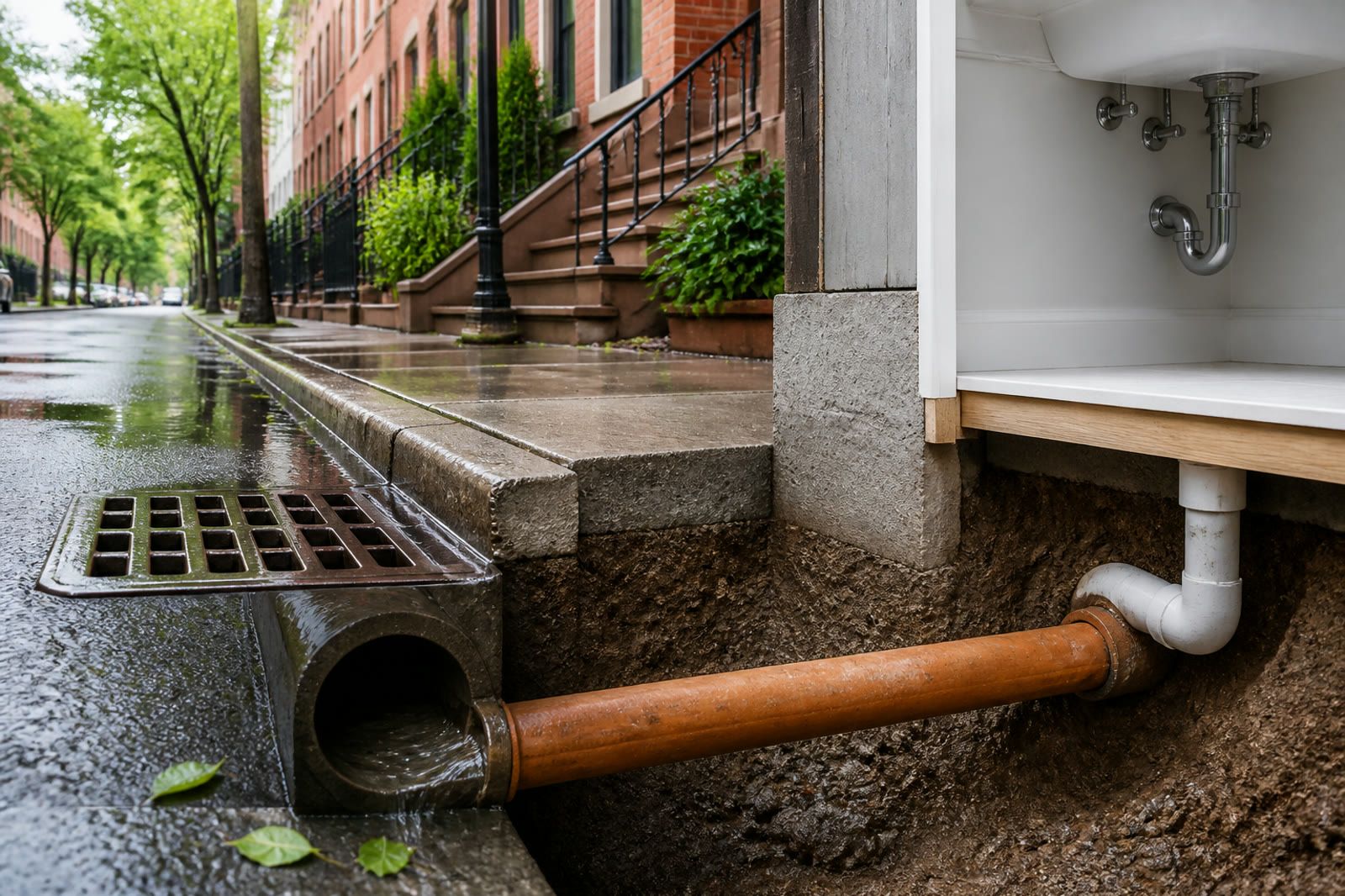
If raw sewage is backing into a Brooklyn building, report it to 311 and call a sewer professional when the private line may be blocked or damaged. Those are not duplicate calls. NYC DEP handles the public sewer system; the property owner is responsible for the service line from the building to the City sewer main.
That division sounds clean on paper. During a real backup, it rarely looks clean from the basement. Here is how to make the calls in the right order without pretending you can diagnose an underground pipe from the water on the floor.
First: treat sewage as a health and electrical hazard
Stop using sinks, toilets, showers, laundry, and dishwashers. Keep people and pets out of the affected area. Do not stand in contaminated water near outlets, panels, appliances, or extension cords.
NYC DEP’s sewer-backup guidance warns that floodwater and sewage can contain disease-causing organisms. Photograph the damage from a safe place if you may need a record for your insurer, then arrange proper cleanup. A 24/7 emergency sewer response can address the line; it does not replace electrical or medical help when either is needed.
Call 311 when raw sewage backs up
DEP tells New Yorkers to report a raw-sewage backup to 311. The report gives the agency an incident to investigate and helps it see whether nearby complaints point to a City-system problem.
DEP says that if its investigation finds a problem in the City sewer system, it will begin repair work. If the problem is in the private service line, the property owner may receive a Notice to Repair. Save the 311 service-request number and note when the backup began, whether it followed rain, and whether neighbors are affected.
Brooklyn’s wet-weather context matters. About 60% of New York City uses combined sewers, where one system carries sanitary wastewater and stormwater. DEP explains that heavy rain can create higher-than-normal flows. A cluster of backups during the same storm can suggest a public-system event, but it does not prove that your private lateral is clear.
Call a sewer professional for the private side
Call when sewage is rising, the building cannot safely use plumbing, or the backup continues after rainfall ends. Also call when only your building is affected, several fixtures are slow together, or the same line has backed up before.
A professional can check accessible building drains and inspect the private lateral. A sewer camera inspection may separate an obstruction from roots, grease, an offset joint, a break, or a collapse. That evidence determines whether the next step is cleaning or sewer-line repair. We won’t quote what we can’t show you.
For repair or relay work on a house connection, NYC requires the proper permitting route. DEP’s sewer-connection page says a Licensed Master Plumber must file the permit, and NYC DOB explains the related application and inspection process. Do not let someone describe street excavation as a casual add-on.
What each side can—and cannot—tell you
311 and DEP can:
- record and investigate a sewage-backup complaint;
- check for a condition in the public sewer system;
- start City-side work when DEP confirms a public-system problem; and
- issue a private-line repair notice when its investigation points there.
A sewer professional can:
- check accessible drains and the building sewer;
- clear a private-line blockage when that is the right fix;
- put a camera through an accessible entry to document visible conditions; and
- scope private repair options, including the licensed and permitted work required.
Neither call, by itself, proves the whole path is sound. DEP may clear a public issue while a narrowed private clay lateral remains. A plumber may restore private flow while a storm-related surcharge is still happening outside. That is why the storm-backup history, 311 record, neighbor reports, and camera findings belong in the same diagnosis.
A simple call order for a Brooklyn backup
- Stop water use and keep clear of contaminated or electrically unsafe areas.
- Report raw sewage to 311 and save the request number.
- If the building remains unusable or the private line may be involved, call a sewer professional.
- Ask what evidence separates a clog, pipe defect, and public-system surcharge.
- Before approving repair, ask to see the visible defect and confirm who will handle permits.
Frequently asked questions
Does 311 send a plumber to my house?
No. A 311 report routes the complaint to the appropriate City agency, and DEP may investigate the public sewer. Private plumbing and the service line remain the owner’s responsibility.
How can I tell whether the backup is in the City main?
You usually cannot tell from one symptom. Multiple nearby buildings affected during the same rain event can point toward the public system. A backup isolated to one property can point toward the private line. DEP’s investigation and private-side inspection supply the evidence.
Should I wait for DEP before calling someone?
Not when sewage is rising, the building cannot use plumbing, or there is an urgent health or property risk. Make the 311 report, then arrange private-side help. The two tracks can run at the same time.
Who pays if the private lateral is broken under the sidewalk?
NYC assigns the owner responsibility for the service line from the property to the City main—even where it crosses the sidewalk or street. Our guide to the NYC property-line rule explains the boundary and permitting steps.
Need the private line checked now?
Brooklyn Sewer Solutions is owner-operated and available 24/7. We diagnose the accessible line, show the evidence, and explain the scope before asking you to approve it.