How Often Should You Clean a Sewer Line?
There is no single sewer cleaning interval that fits every Brooklyn building. A line with no symptoms and a line that has backed up twice in a year deserve different conversations. Start with what the pipe is doing and what an inspection shows, rather than buying a calendar schedule on its own.
If sewage is coming up now, stop using fixtures that drain into the affected line and call for help. Keep away from the water, especially around electrical equipment. Our emergency service page explains how to reach us.
What affects the cleaning interval?
The pipe’s condition matters. Roots entering through a joint, buildup that restricts flow, or a damaged section can produce different problems. The number of fixtures and how a building is used can matter too. A previous backup is useful history, but it does not prove the same blockage has returned.
Tell us when the last problem occurred, which fixtures were affected, and what work was done. If you have a prior camera recording or invoice, keep it handy. The location of an earlier obstruction can help us compare what we find now, though a recording only shows the conditions visible at the time it was made.
The material removed last time can be useful information too. Was the restriction described as grease, roots, or something else? Ask for the location as well as the description. Without a location, two similar visits may not involve the same part of the line.
If you manage a building with several units, note which areas were affected and when. Ask residents to report changes instead of making them repeatedly run water to reproduce a backup. This history gives us a starting point; it does not replace an inspection.
Does a clear drain mean the pipe is healthy?
No. Water moving today tells you the line is carrying water today. It does not show every joint or establish that the pipe is free of defects. On the other hand, a slow fixture alone does not prove that the main sewer needs cleaning. We want to understand the pattern before recommending work.
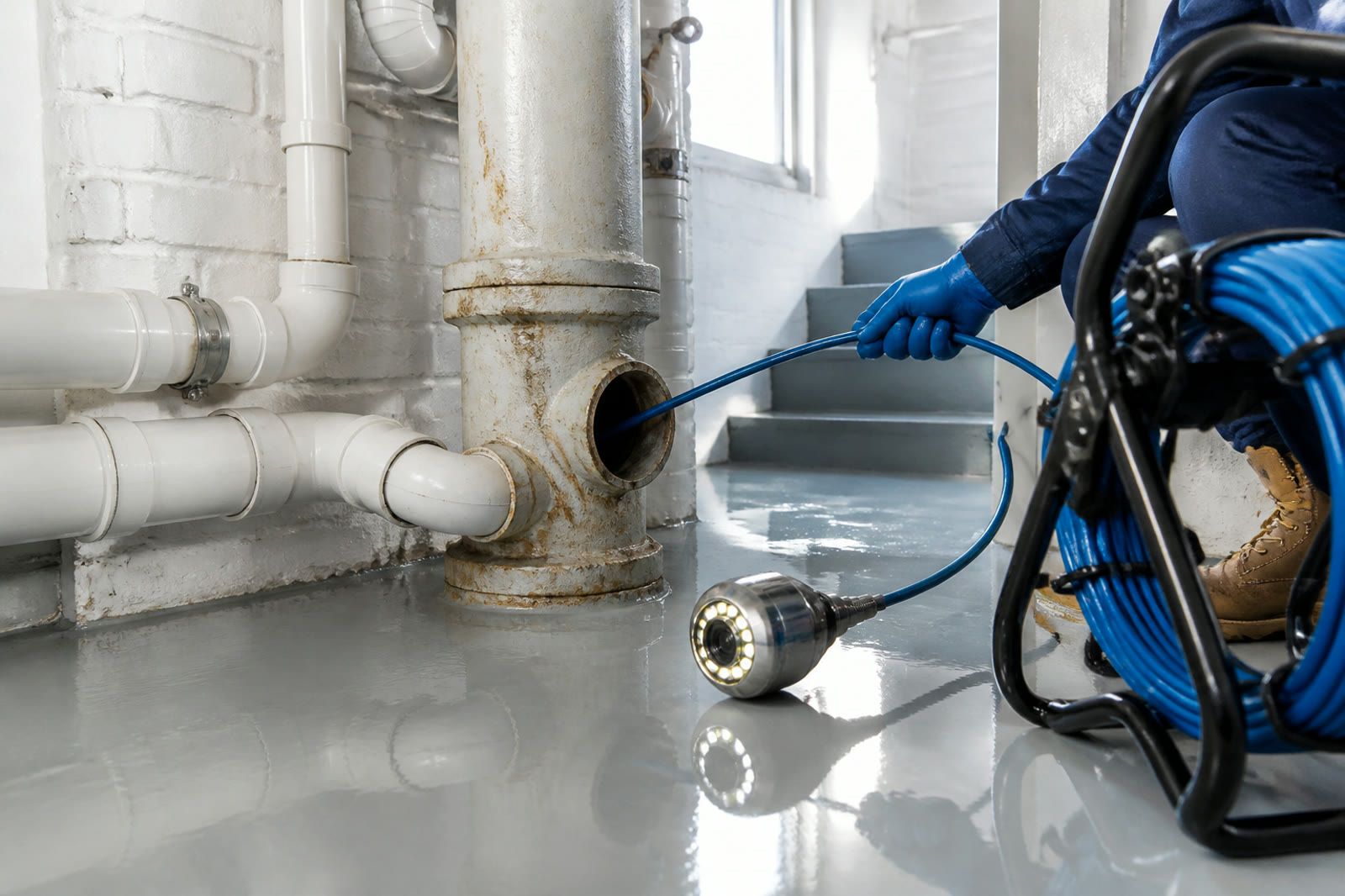
A camera inspection can show accessible portions of the pipe when conditions permit. Heavy standing water or a blockage may hide part of the view. Sometimes the line has to be opened first, then inspected again. Ask which sections were visible and whether an obstruction stopped the camera.
What if the line keeps needing cleaning?
Ask what was removed and where it was found. Cleaning may restore flow without correcting the reason material collects at that spot. Roots can enter through an opening; a displaced joint or a low section can affect how material moves. A camera view may help identify a condition worth investigating, but it cannot by itself prove every cause.
If a repair is proposed, ask to see the relevant footage and have the location explained. Our guide to reading a sewer camera video covers questions to bring to that discussion. A cleaning schedule should not become a substitute for understanding a recurring issue.
Ask whether the recommendation is meant to clear material, monitor a known condition, or repair the pipe itself. Those are different scopes. Find out what is included in the quoted visit and what would require separate approval. If a section could not be seen, ask what would be needed to examine it and whether that additional work is included.
You can also ask what signs should prompt another call. A recommendation tailored to an observed condition is more useful than a universal number of months. Keep the recording and written scope together so you can refer back to them later.
If the line is serving a restaurant or another busy space, explain the use when you call. The amount and type of material entering a line may differ from a residence. We can discuss an appropriate assessment for that property without assuming that a residential schedule fits it.
What can you do between visits?
Keep cooking grease out of the drain and put wipes and other trash in the bin. These habits reduce material entering the system; they cannot repair a damaged line or guarantee that a backup will never occur. If a fixture begins to drain differently, note when it happens instead of repeatedly flushing to test it.
When you call, tell us whether the change followed an earlier service visit and whether it happens in dry weather or during rain. That timeline is useful context. We will discuss what can be checked and what the work includes before you decide how to proceed.
For a Brooklyn drain problem, call Brooklyn Sewer Solutions at (718) 517-0800 or contact us. Tell us what you have noticed and we can discuss the next step for your line.