
Sewer Smell in the House: What to Check Before It Gets Worse
An indoor sewer-like odor can have more than one source. A dry drain trap, a loose plumbing connection or a vent problem is possible, but smell alone cannot identify the cause or tell you whether an area is safe.
If you suspect a gas leak, leave immediately with everyone else. Do not operate switches, appliances or phones in the area, and do not create a flame. From a safe location, call 911, then your gas utility. A rotten-egg smell can also be associated with natural gas. Do not assume it is a plumbing odor and investigate first. See NYC’s gas leak guidance and Con Edison’s safety guidance.
If you believe sewer gas has built up in an enclosed space, leave the building and call the fire department from outside. Do not create a spark or flame. Wisconsin’s health department explains these precautions. If anyone feels unwell and suspects exposure, seek medical advice. Call 911 for an emergency.
What you can note when the area is safe
After a suspected gas hazard has been ruled out and you can safely remain inside, note where and when you notice the odor. Is it near a seldom-used sink, floor drain or toilet? Does it occur after water use or rain? Are other fixtures slow or gurgling? These observations give a plumber a starting point, not a diagnosis.
A plumbing trap holds water that helps keep sewer gas out. A trap at a rarely used fixture can dry out. If the area is safe, the drain is not backing up and the fixture is suitable for normal use, run some water into the unused fixture and note whether the odor changes. Do not add water to a drain that is already overflowing. A returning odor needs further investigation.
If a toilet rocks or the smell seems strongest around it, tell the plumber. A seal or another nearby condition may need attention. The smell alone does not confirm the cause. A visibly open or damaged cleanout cap is also useful to mention. Do not open or remove a cap to investigate.
What if the odor comes with a backup?
Stop using fixtures that drain to the affected line and keep away from sewage or standing water. Stay out of a flooded basement, especially near electrical equipment. If you are in immediate danger, call 911. NYC’s sewage cleanup guidance describes precautions. You can also reach us through our emergency service page.
Do not pour a chemical drain opener into an odor source or mix cleaners. If you have already used a product, keep its label and tell the person responding before work starts.
How can a plumber find the source?
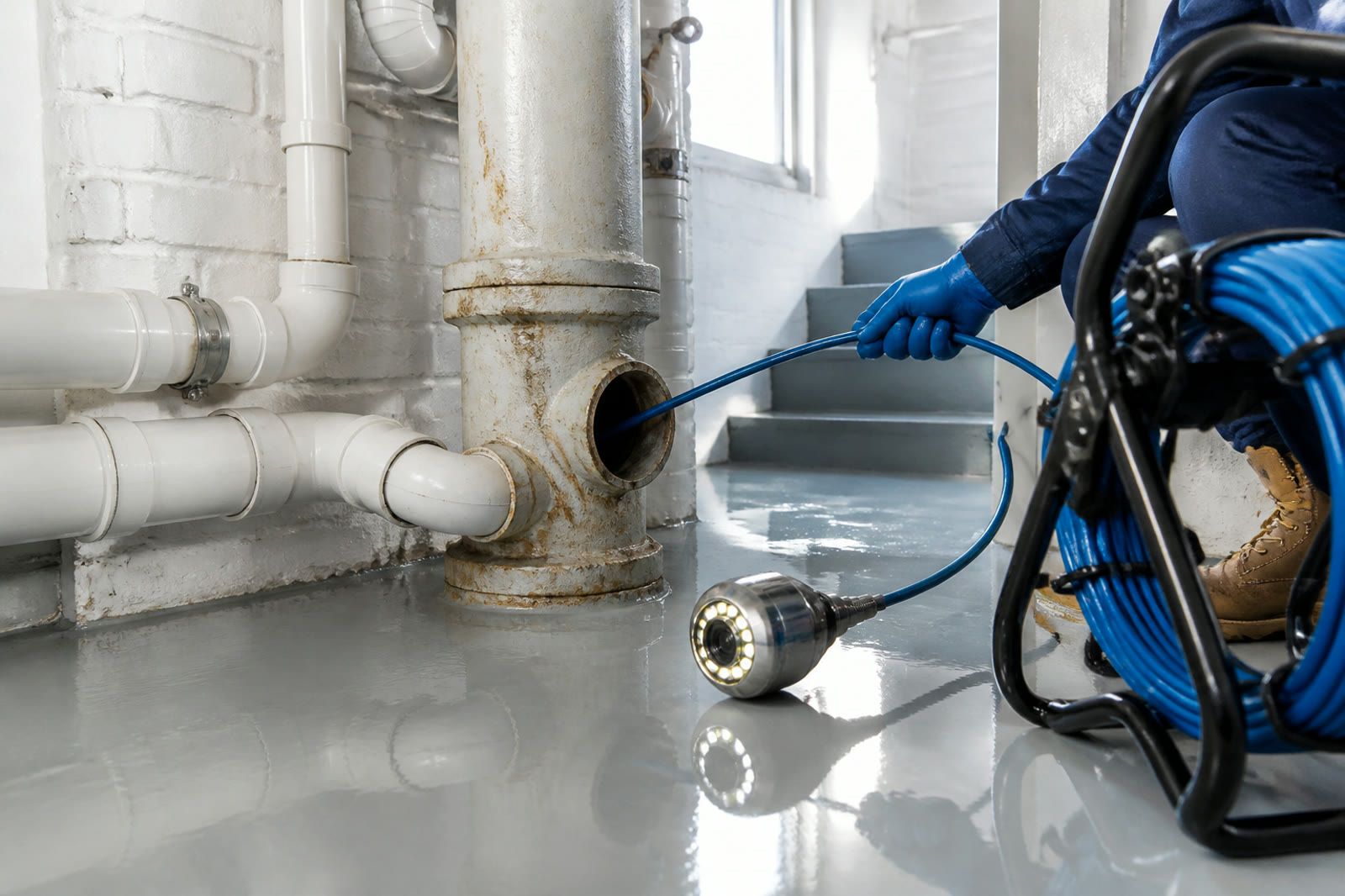
A plumber may check traps, fixture connections and accessible plumbing, then decide what further investigation is appropriate. A camera inspection can show accessible portions inside a line when the view is clear. Standing water or a blockage can hide part of it. A camera alone cannot identify every fixture, vent or odor problem, or predict whether a smell will return.
If a blockage is found, drain cleaning may be discussed separately from any repair. Ask what was observed, what remains uncertain, and whether another kind of inspection is needed. Do not climb onto a roof or enter a confined space to check a vent or pipe yourself.
What to tell us
Share the location, when the odor appeared, any slow drains or backup, and any cleaner used. In a multi-unit building, tell the building manager as well. Nearby units may share plumbing. If you have a prior service record, keep it available.
For a persistent plumbing odor after immediate hazards have been addressed, call (718) 517-0800 or contact Brooklyn Sewer Solutions. We can discuss the next assessment based on what you observed.