
How Long Does Sewer Line Repair Take in Brooklyn?
The time depends on the repair, access to the pipe, approvals and restoration. A contractor may be able to give you a working schedule after assessing the line, but an unseen condition can change it. Ask for separate estimates for the wait before work starts, time without normal drain use, active pipe work and final restoration.
There is no reliable number of hours or days for an unseen Brooklyn sewer line. A small accessible repair and a replacement beneath a finished basement or sidewalk can involve very different work. Even after the pipe is usable, surface restoration or a required inspection may remain.
What affects the schedule?
The condition and length of pipe. A localized repair addresses a defined section. A longer replacement has a different scope. An initial view may be incomplete if water or debris blocks the camera. Ask what is known and what might be discovered after access or cleaning.
Access. A pipe beneath a yard, a basement floor or a sidewalk presents different access and restoration questions. Ask where work is expected and what areas must be kept clear. Utilities and site constraints may affect the plan.
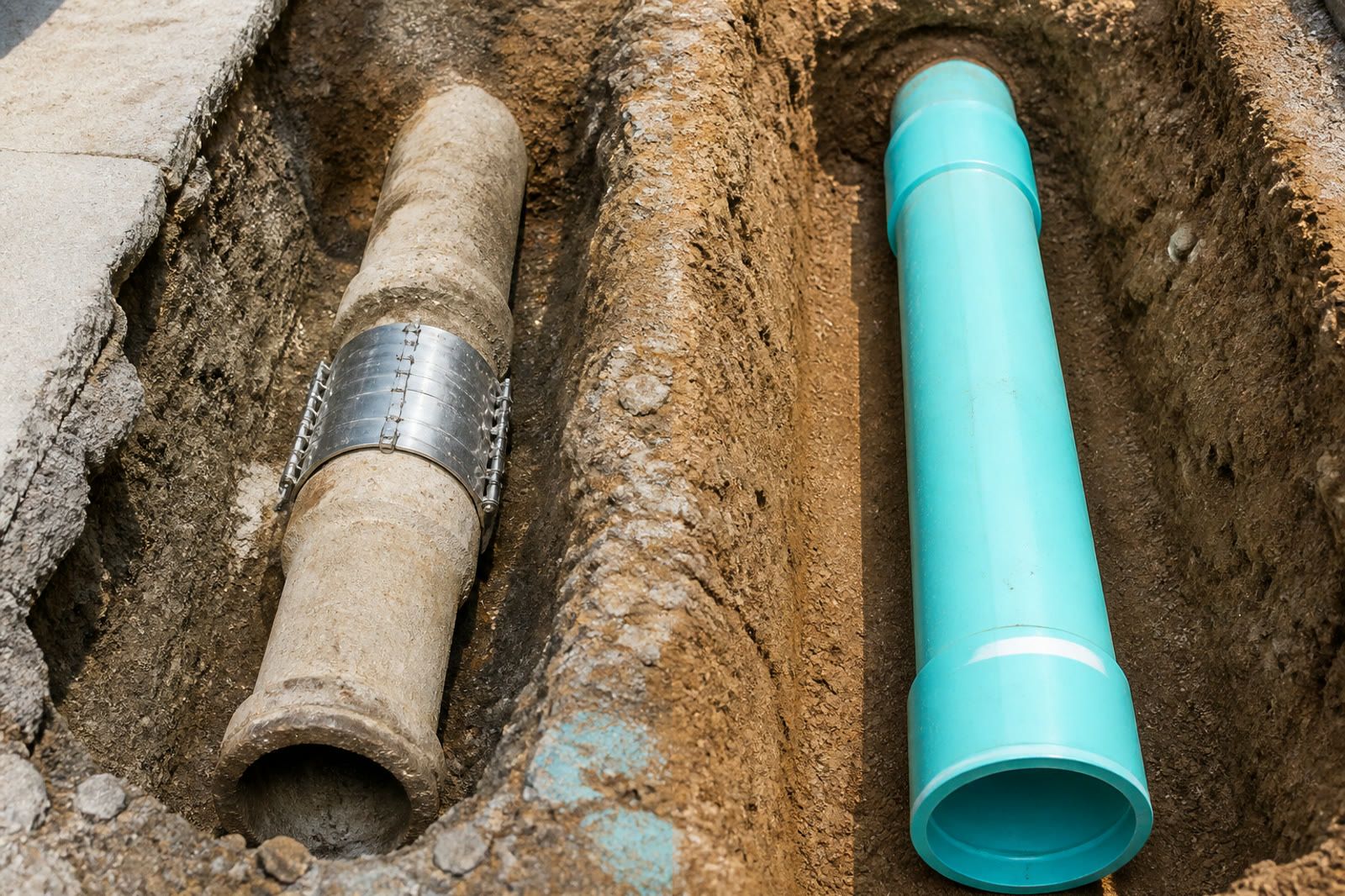
The method. Open excavation exposes the pipe for repair or replacement. Trenchless methods may reduce excavation along the line, but they can still require access openings and are not suitable for every pipe. Lining and pipe bursting are different methods. Ask which is proposed and why it fits the condition. The EPA’s pipe-bursting fact sheet describes access requirements and limitations. It does not establish a schedule for your property or a particular contractor’s services. See our trenchless repair page for the service we describe.
Approvals and coordination. Ask which permits, utility coordination or inspections apply to the proposed work, who arranges them and whether their timing is confirmed. Requirements depend on the job. Do not assume that every repair follows the same process.
Restoration. Ask whether the quote includes backfill, pavement, landscaping or interior finishes, and whether a separate crew or later visit is needed. The date the drain can be used and the date the site is fully restored may be different.
A practical sequence
First, describe which fixtures are affected and when. An assessment may include a camera inspection of accessible portions of the line. Ask which sections were visible. Footage does not show every condition outside the pipe, and it may not settle the cause on its own.
Next, request a written scope identifying the section, method and assumptions. Our pricing page explains why the scope matters. Before approving work, ask what additional findings could change the method or price and how you will be notified.
The crew can then schedule the work and any required coordination. Ask when you should stop using fixtures, what temporary arrangements are needed and when you can use the line again. Those answers should be specific to the work proposed, not a universal promise.
After pipe work, ask how the result will be checked and what restoration remains. If a follow-up camera view is proposed, ask what it covers and whether it is included. Keep the written scope and any change approvals with your service record.
Questions to ask before work starts
- What is the expected start window, and which parts depend on outside approvals?
- When will drains be unavailable, and how will I know when I can use them again?
- What access and restoration are included? What is separate?
- What could change the schedule, and how will you tell me?
- How will the work be checked before the job is closed out?
For a Brooklyn sewer concern, call (718) 517-0800 or contact Brooklyn Sewer Solutions. We can discuss the assessment and provide a schedule based on the proposed scope.