
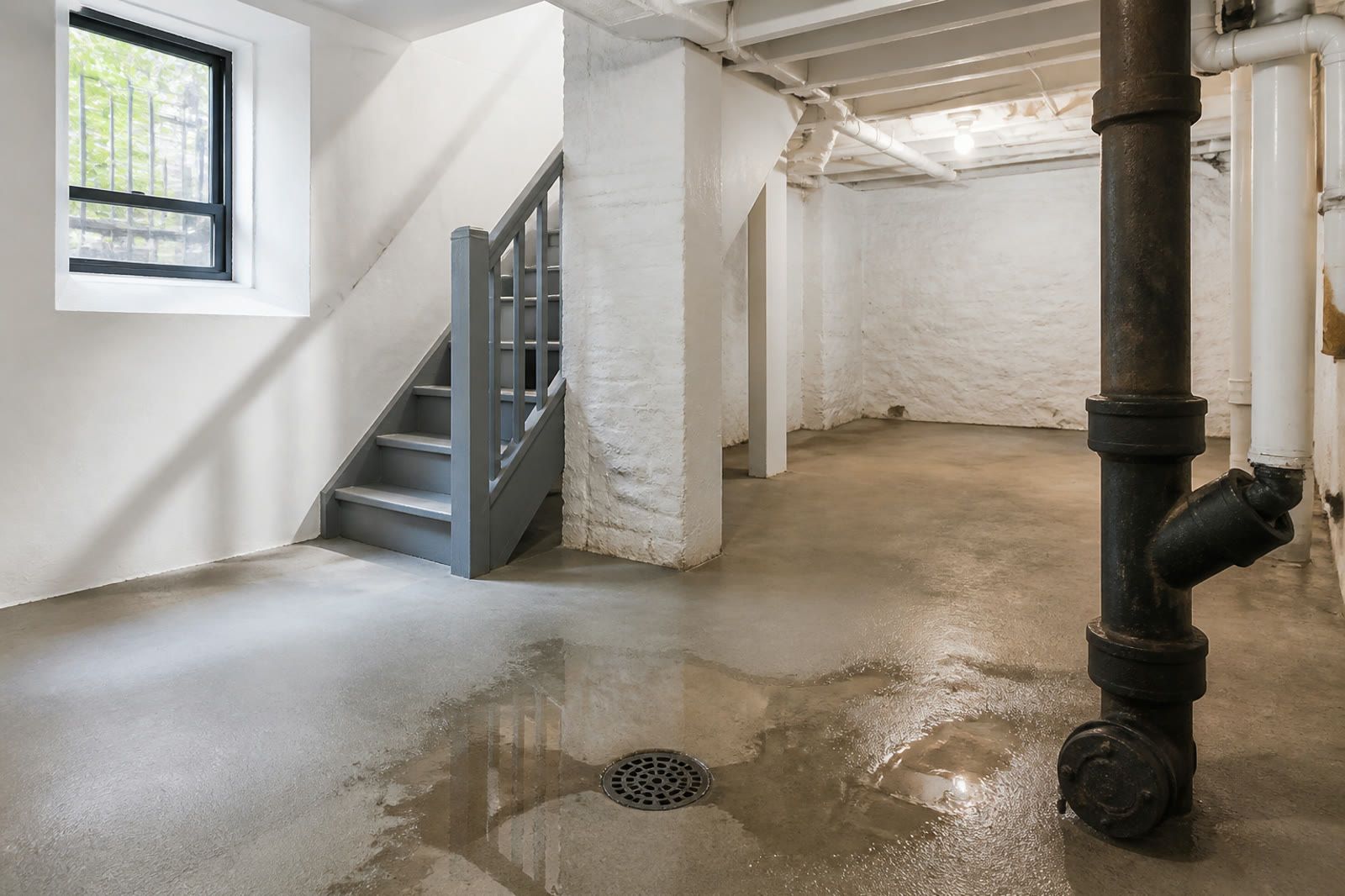
Why your Brooklyn basement floods after heavy rain
If water comes up through the floor drain every time it pours, that may be sewer backflow rather than groundwater. Here’s what can happen under a Brooklyn street, what to do during a backup, and which fixes are worth assessing for your property.
Quick answer first: one cause of rain-driven basement flooding in Brooklyn is sewer water backing up through a low drain or fixture when a combined sewer is overwhelmed. A backwater valve may help on the right property, and a partially blocked private lateral may also need attention. The cause has to be diagnosed before anyone can prescribe the fix.
Brooklyn’s combined sewer system, in plain English
About 60% of New York City is served by a combined sewer system: the same network carries wastewater from buildings and stormwater from street drains, according to NYC DEP. During heavy rain, flow can exceed the capacity of parts of that system. DEP’s page explains the citywide result—combined sewer overflows at designated outfalls—but the same wet-weather rise in a nearby sewer can also matter to low, connected fixtures inside a building.
When the water level in a sewer main rises above a building’s lowest connected drain or fixture, flow can move backward through the private lateral. In a brownstone or row house, the first sign may appear at a basement floor drain, laundry sink, tub, or toilet.
That is one reason flooding can begin during heavy rain, especially where below-grade fixtures sit low relative to the street sewer. Other sources — including surface water, foundation openings, groundwater, and a blockage in the private line — can produce similar symptoms, so the timing alone does not prove the cause.
Why some houses flood and others don’t
Three factors can affect whether a basement takes sewer backflow:
- Elevation. A drain or fixture below the nearby sewer’s surcharge level is more exposed to backflow.
- Open connections. A floor drain, basement bathroom, or laundry standpipe can become the low opening where backflow appears.
- The condition of the private lateral. A line narrowed by roots, grease, or another obstruction has less working capacity. This part is worth checking with a camera inspection.
What to do during a backup — and what not to do
- Stop using water. Every flush, shower, or appliance cycle adds flow while the line may have nowhere to send it.
- Stay out of standing sewage water, especially near outlets or appliances. It is a contamination and electrical hazard, not just a mess. NYC DEP’s sewer-backup guidance warns that floodwater and sewage may contain bacteria, viruses, and other organisms that can cause illness.
- Do not work on the line while water is rising. Keep clear of the affected area and wait for a professional assessment.
- Photograph the damage from a safe location before cleanup if you may make an insurance claim.
- Report raw sewage backing into the home to 311. NYC DEP says to report raw sewage backups to 311 so it can investigate. If DEP finds a City-system problem, it starts the repair; if the defect is in the private service line, the owner may receive a Notice to Repair.
If sewage is still rising after the rain has stopped, a blockage or break in the private line may be involved. That is a call-now situation. Brooklyn Sewer Solutions is available 24/7.
One option to assess: a backwater valve
A backwater valve is a one-way device installed on the building drain or sewer lateral. Normal outgoing flow can pass through it. When flow reverses from the street, the valve closes to reduce the risk of sewage entering the building. New York City’s plumbing code requires an accessible backwater valve where fixtures or drains are subject to public-sewer backflow; the device must remain accessible for service and repair (NYC 2022 Plumbing Code, Chapter 7, §715). Whether an existing Brooklyn building needs or can use one is a property-specific plumbing decision.
Two honest caveats matter. First, backwater valves are not equally effective for every property. The elevations, pipe layout, and source of flooding determine whether one fits. Second, while a valve is closed, wastewater generated inside the building cannot leave through that line, so water use must be limited during the event. Downspouts or other building drainage connected upstream of the valve can also add water behind it. Those limitations are set out in DEP’s citywide backwater-valve study, which also stresses access and maintenance.
Whether your house is a good candidate — and where the valve should go — depends on the basement layout and the condition of the lateral. We cover the decision on our storm-related backups page.
Smaller moves that stack the odds in your favor
- Keep the private lateral clear. If multiple drains have been slow or backups recur outside storm events, address that before the next downpour. See our drain cleaning service.
- Report a clogged or damaged catch basin to 311. Do not enter the street or try to open the basin yourself.
- Move valuables and utilities off the basement floor where practical. Keep children, pets, and anyone with a compromised immune system out of sewage-contaminated areas.
- Check your insurance policy. Sewer-backup coverage is often separate from a standard homeowners policy; ask your insurer or broker what your policy includes.
Frequently asked questions
Why does my basement only flood during heavy rain?
A combined sewer may become surcharged during heavy rain, pushing water toward low basement drains and fixtures. Surface runoff, groundwater, foundation openings, and a private-line problem can look similar. The right next step is to document when and where water enters, report a sewer backup to 311, and have the private line assessed.
Does a backwater valve really work?
It can reduce backflow risk when the property’s elevations and plumbing layout make it a good fit. It is not a universal answer. NYC DEP’s study found that effectiveness varies by property and recommends evaluation by a licensed plumber. The valve also cannot protect against groundwater or surface water entering through walls, windows, or exterior drains.
Is storm backup damage covered by homeowners insurance?
Many standard homeowners policies do not include sewer-backup coverage, and flood coverage is a separate issue with its own limits. Check the exact policy language with your insurer or broker before storm season.
Related
- Storm-Related Sewer Backups — the full breakdown
- 24/7 Emergency Service — if it is happening right now
- Drain Cleaning — assess the private lateral
Flooded more than once?
Look at the line before the next storm does. A camera inspection can help separate a private-lateral problem from a broader rain-driven backup and show whether a backwater valve assessment makes sense.
Call (718) 517-0800 or request a callback.