
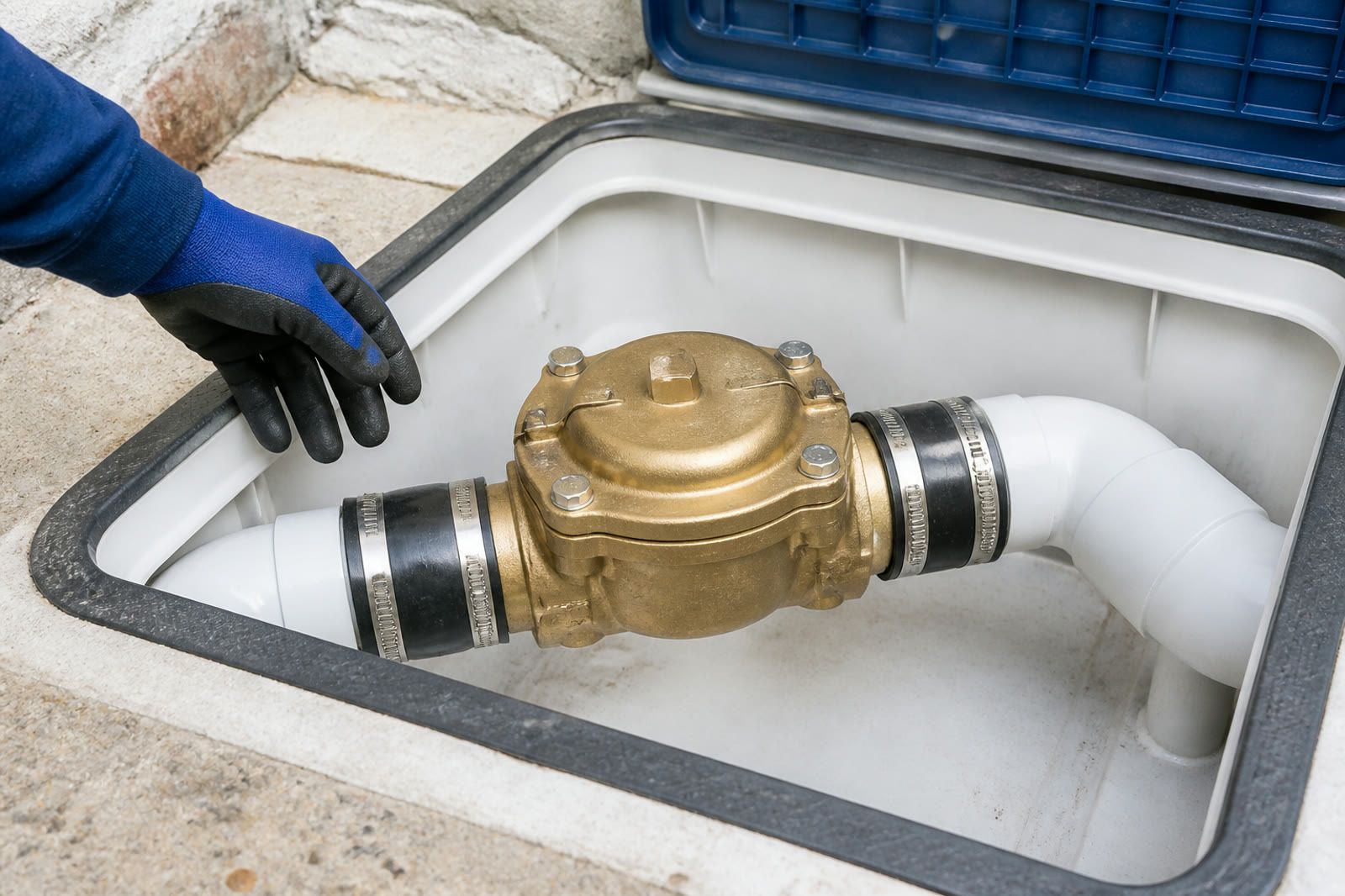
Backwater valves in Brooklyn: when you need one—and when you don’t
A backwater valve may be worth evaluating when a Brooklyn building has low fixtures exposed to public-sewer backflow. It is not a universal cure for every wet basement. The valve only addresses reverse flow through the sewer connection; it cannot stop groundwater, surface runoff, or water entering through a wall, window, roof drain, or foundation opening.
That distinction matters. “Basement floods after rain” describes a symptom. A valve should be selected from the cause, elevations, and pipe layout—not from the weather forecast.
What a backwater valve does
A backwater valve is installed in the building drain or sewer connection. In normal conditions, wastewater flows out toward the public sewer. When water tries to reverse direction, the valve closes to reduce the chance of sewer water traveling back into the building.
NYC’s plumbing code requires backwater protection where fixtures or drains are subject to backflow from the public sewer. The valve must use an approved mechanical seal and remain accessible for service and repair (NYC 2022 Plumbing Code, Chapter 7, §715). That is a code standard, not permission to buy a valve and bury it behind a finished basement wall.
Why the question comes up in Brooklyn
About 60% of New York City is served by combined sewers, according to NYC DEP. One network carries sanitary wastewater and stormwater. Heavy rain can create high flows in that system.
In a Brooklyn brownstone or row house, a cellar floor drain, laundry sink, bathroom, or other low fixture may sit below the level a nearby sewer can reach during surcharge. If the hydraulic pressure outside exceeds the protection inside, sewer water can seek the lowest connected opening.
But not every block, building, or rain event behaves the same way. A private lateral narrowed by roots, grease, scale, or a structural defect can also back up during ordinary use. Surface water can run down cellar stairs. Groundwater can enter through a slab. Before talking about a valve, separate those paths.
When a backwater valve may fit
It is reasonable to evaluate a valve when:
- sewage enters through a low connected drain or fixture during wet weather;
- the building has below-grade plumbing exposed to public-sewer surcharge;
- the private lateral has been inspected and its own obstruction or break is not being mistaken for backflow;
- the pipe layout provides an accessible, serviceable installation location; and
- a licensed plumber confirms the design, permits, and code requirements.
DEP commissioned a detailed citywide sewer-backup and backwater-valve study. It found that subgrade basements in combined-sewer areas are the most likely wet-weather backup locations, while also warning that valves are not equally effective for every property. That is the honest answer: the device works by a clear principle, but the building determines whether it solves the observed problem.
Our storm-backup guide helps organize the history before an onsite assessment.
When a backwater valve may not solve it
A valve is the wrong first answer when:
- water enters through a foundation crack, hatch, window, exterior stair, or overland route;
- the cause is groundwater rising beneath the slab;
- a blockage or collapse in the private line is creating the backup;
- the valve would be inaccessible for inspection and maintenance;
- internal fixtures or roof drainage would keep discharging behind a closed valve; or
- the proposed location would isolate plumbing in a way the design has not accounted for.
While the valve is closed, wastewater inside the building cannot pass through it. Continued flushing, laundry, or showering can create an internal backup on the building side. DEP’s study also flags downspouts and other connections upstream of the valve as property-specific design issues.
Diagnose the line before choosing hardware
Start with the path the water took. When did it begin? Which drain or fixture showed it first? Did it happen only during rain? Were neighbors affected? Did the building have slow drains or backups in dry weather?
Then inspect the private side. A camera inspection can show roots, grease, scale, offsets, breaks, or collapse in accessible portions of the lateral. If the pipe itself needs sewer-line repair, installing a valve without addressing that defect can leave the main cause untouched.
Also report raw sewage backups to 311. DEP says it will investigate whether the problem is in the City system; if it is private, the owner may receive a Notice to Repair. The 311 history and private camera findings answer different parts of the same question.
Installation is not the end of the job
A backwater valve has moving and sealing parts. It has to remain accessible. The cover should not disappear beneath tile, concrete, storage, or finished millwork. Maintenance instructions depend on the installed device, but inspection for debris and free movement is part of owning one.
Ask the installing plumber to explain:
- which fixtures and drains the valve protects;
- what happens to building wastewater while it is closed;
- whether any roof or yard drainage connects upstream;
- where the access cover will remain visible;
- how to inspect and maintain the specific model; and
- which permit and inspection requirements apply.
For a sewer house-connection repair or relay, NYC DEP requires a Licensed Master Plumber to file the permit. Valve work and building alterations should likewise be scoped through the appropriate licensed professional.
Frequently asked questions
Is a backwater valve required in every Brooklyn basement?
No. NYC code ties the requirement to fixtures or drains subject to public-sewer backflow. Existing-building conditions, elevations, and planned work need a property-specific code review.
Can I keep using water when the valve closes?
Limit water use. Wastewater generated inside may have nowhere to go while the valve is sealed. The plumbing design should make that operating condition clear before installation.
Will a backwater valve stop rainwater from entering my basement?
Only if the rain-related entry is sewer backflow through the protected connection. It will not stop surface runoff, groundwater, foundation leakage, or an exterior drain routed outside the protected layout.
What if sewage is backing up right now?
Stop water use, keep away from contaminated water and electrical hazards, report the backup to 311, and call for emergency sewer service if the private line needs immediate attention.
Before anyone quotes a valve
Brooklyn Sewer Solutions is owner-operated and available 24/7. We inspect the accessible private line and explain whether the evidence points to a blockage, structural defect, or wet-weather backflow pattern. We won’t quote what we can’t show you.